
Adolescent Idiopathic Scoliosis (AIS): What Parents Need to Know
Updated: Mar 17
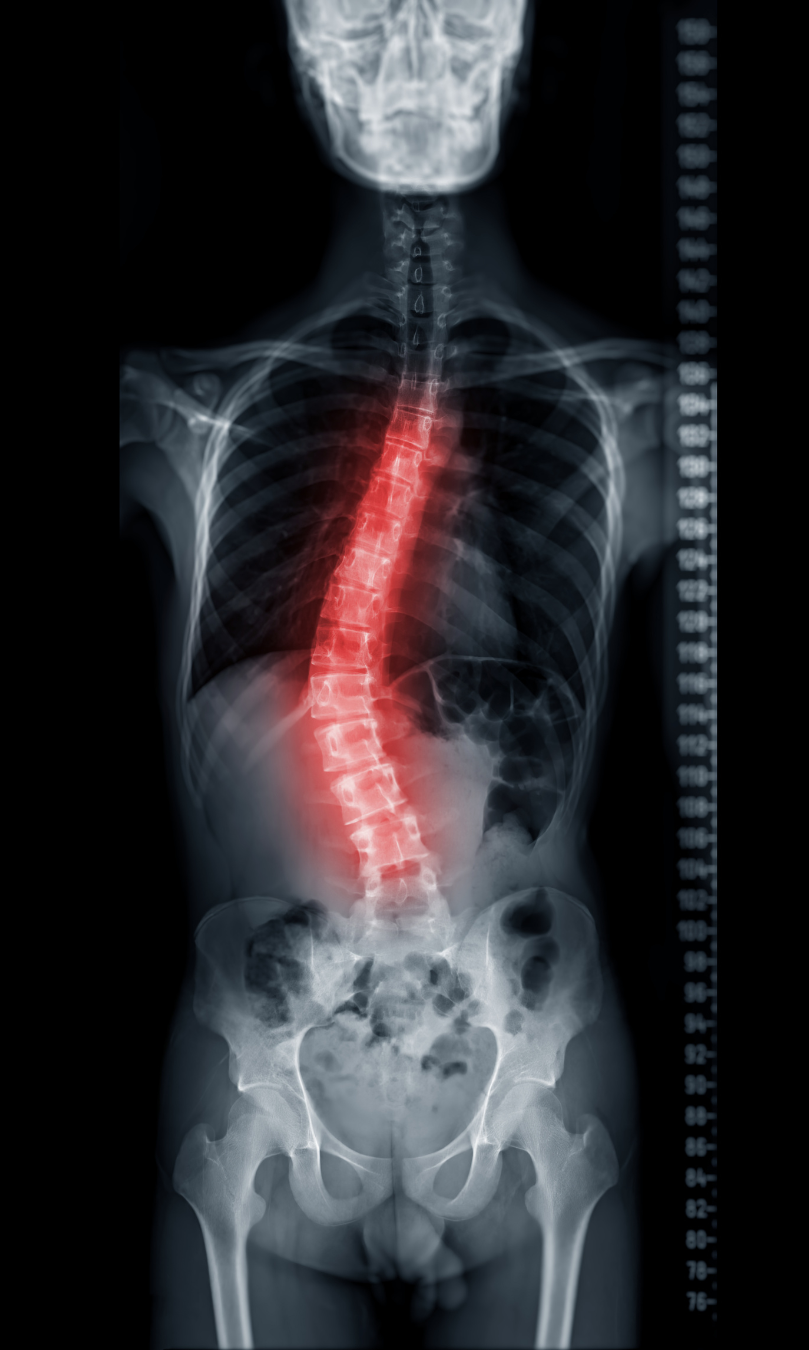
Adolescent Idiopathic Scoliosis (AIS) is the most common type of scoliosis seen during childhood and adolescence, typically developing during the growth years. It most often appears between the ages of 10 and 18, coinciding with periods of rapid growth (Shannon et al., 2021).
AIS affects approximately 2–4% of adolescents worldwide, making it far more common than many families realise (Ren et al., 2025). While many cases remain mild, some spinal curves can progress during growth spurts, which is why early identification and regular monitoring are so important.
Why Monitoring During Growth Matters
AIS is characterised by a sideways curvature of the spine that appears without a known cause. While the exact reason AIS develops is still unclear, research shows that curve progression is closely linked to growth velocity. This means changes can happen relatively quickly during puberty and growth spurts (Ren et al., 2025).
For this reason, regular assessment until skeletal maturity allows clinicians to:
Track changes in spinal alignment over time
Identify early signs of curve progression
Adjust care plans as the adolescent grows
Early detection does not necessarily mean aggressive treatment, but it does allow for timely, proportionate support.
How We Assess Adolescent Scoliosis
Assessment of AIS is far more than simply “looking at the spine.” A comprehensive evaluation helps us understand how the spine, muscles, and movement patterns are working together.
Assessment may include:
Postural assessment, including shoulder, rib, and pelvic symmetry
Adam’s forward bend test, commonly used to screen for spinal rotation
Review of previous imaging and Cobb angle measurements if X-rays are available
Evaluation of spinal alignment, flexibility, and core muscle function
Gait and movement pattern assessment to understand functional loading
X-rays are only recommended when clinically indicated and are typically used to monitor curve progression rather than as a routine screening tool (Wong et al., 2025; Ren et al., 2025).
How Chiropractic Care Can Support Adolescents With AIS
Chiropractic care does not aim to “cure” scoliosis. Instead, it focuses on supporting movement, comfort, function, and overall spinal health, particularly during growth phases.
Lifestyle and Habit Education
Education is a key part of care for adolescents and their families. This may include:
Guidance on postural awareness and body mechanics
Encouraging age-appropriate core strengthening habits
Advice on growing adolescent ergonomics, including backpack weight and fit, sitting habits, and study station setup
Support for safe participation in sport, with modifications when needed to reduce repetitive overload
These strategies help reduce unnecessary strain on a growing spine and support long-term movement confidence (Wong et al., 2025).
Manual Therapy and Movement Support
Where appropriate, chiropractors may use spinal manipulative therapy and mobilisation to support pain relief, improve joint motion, and help modulate neuromuscular function. Current evidence suggests these approaches may improve comfort and quality of life when used as part of a broader, individualised care plan (Sun et al., 2023; Piqueras-Toharias et al., 2024).
Working as Part of a Care Team
AIS management is often most effective when delivered collaboratively. Chiropractors commonly work alongside:
Orthopaedic or scoliosis specialists
Brace clinics when bracing is indicated
This integrated approach ensures adolescents receive appropriate monitoring and coordinated care as they grow (Ren et al., 2025; Wong et al., 2025).
Supporting Growing Spines With Confidence
A scoliosis diagnosis can feel overwhelming for families, but most adolescents with AIS live active, healthy lives. The key is early assessment, regular monitoring, and supportive care that evolves with growth.
At Realign Health Clinic, we take a calm, evidence-informed approach to adolescent scoliosis, focusing on education, movement quality, and long-term spinal health.
Ready to learn more?
Book a paediatric or adolescent spinal assessment
Ask about posture, backpack setup, and movement support
Get guidance tailored to your child’s stage of growth
Book an appointment online to support your child’s growing spine with confidence.
References
Shannon, B.A., Mackenzie, W.G.S., Hariharan, A.R. and Shah, S.A. (2021) ‘Update in nonoperative management of adolescent idiopathic scoliosis to prevent progression’, Journal of the Pediatric Orthopaedic Society of North America, 3(4), p. 361. https://doi.org/10.55275/JPOSNA-2021-361
Ren, J., Wang, S., Li, M., Zhou, X., Wen, Y., Wen, Z., Lin, J., Kong, L. and Fang, M. (2025) ‘Comparative efficacy of conservative interventions for adolescent idiopathic scoliosis: a systematic review and network meta-analysis of randomized controlled trials’, Systematic Reviews, 14(1), p. 156. https://doi.org/10.1186/s13643-025-02893-1
Wong, A.Y.L. and Chiu, T.S.H. (2025) ‘Physiotherapy management of adolescent idiopathic scoliosis’, Journal of Physiotherapy, 71(4), pp. 229–238. https://doi.org/10.1016/j.jphys.2025.09.001
Sun, Y., Zhang, Y., Ma, H., Tan, M. and Zhang, Z. (2023) ‘Spinal manual therapy for adolescent idiopathic scoliosis: a systematic review and meta-analysis of randomized controlled trials’, BioMed Research International, 2023, Article ID 7928429. https://doi.org/10.1155/2023/7928429
Piqueras-Toharias, M., Ibáñez-Vera, A.J., Peinado-Rubia, A.B., Rodríguez-Almagro, D., Lomas-Vega, R. and Sedeño-Vidal, A. (2024) ‘Effects of high-velocity spinal manipulation on quality of life, pain and spinal curvature in children with idiopathic scoliosis’, Children, 11(10), p. 1167. https://doi.org/10.3390/children11101167


