
Hug The Baby
By Eleanor Lee-Bognar (Director of Integrated Pelvic Floor & Women's Health Physiotherapist)
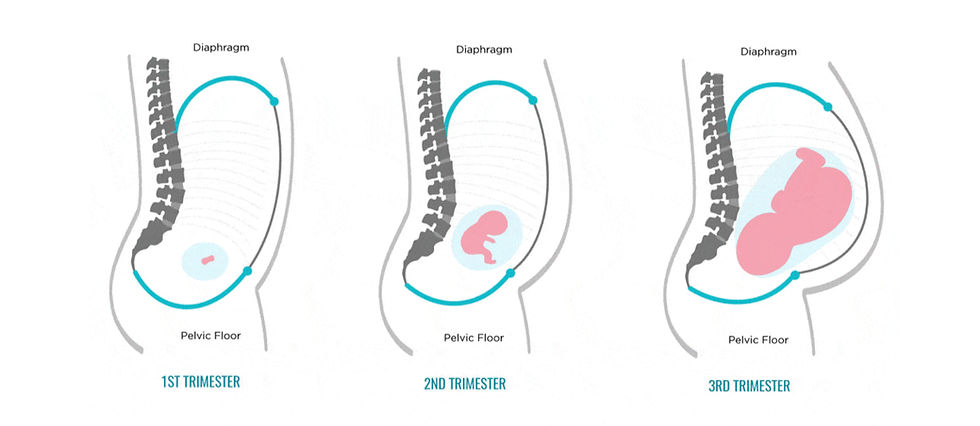
Can the changes associated with pregnancy affect my core?
Our bodies face incredible changes during the course of pregnancy. From the flood of hormones and fatigue to physical shifts in the back, hips, feet, neck, and shoulders, these changes represent a significant departure from our original baseline. I would like to specifically address the change in spinal curvature and its impact on the core muscles.
In my previous blog, I described the "true core" as being inclusive of the diaphragm, transverse abdominis (deep abs), multifidus (deep back muscles), and the pelvic floor muscles (levator ani). An increase in pelvic tilt can affect the load on these muscles, potentially leading to pelvic floor weakness. Along with the growing weight of the baby and hormonal changes, symptoms such as incontinence, constipation, and perineal heaviness can become bothersome during pregnancy.
Understanding the Natural Curve of Your Lower Back
Changes in lumbar lordosis (the natural inward curve of the lower spine) significantly impact the core by altering muscle lengths and leverage:
Increased Lumbar Lordosis (Swayback): An exaggerated inward curve is typically linked to an anterior pelvic tilt where the pelvis tips forward. This causes the abdominals to become stretched and inhibited, losing their ability to stabilize the trunk. Simultaneously, lower back extensors like the erector spinae and multifidus become tight and chronically contracted, often leading to spasms and pain.
Decreased Lumbar Lordosis (Flatback): When the lower back loses its natural curve, the pelvis tends to tilt backward. This overstretches the back extensors and causes the hamstrings and glutes to over-activate, further flattening the spine. This shift transfers more physical load to passive structures like spinal ligaments and discs.
Start Building Your Pregnancy Foundation
Early focus on training the deeper muscles of the pelvis and abdominals can create a functionally supportive "hug" for the growing uterus. While training large muscle groups such as the glutes, trunk, and legs remains important, knowing how to isolate the deeper stabilisers is equally vital to provide a foundational capacity to your changing shape.
Get started today and learn the key exercises to support you through your pregnancy. We aim to provide you with confidence and empowerment with your body during pregnancy. If you are currently experiencing postural discomfort I provide targeted corrective stretches and/or core stabilization exercises to help.
- Are you noticing an exaggerated curve (swayback) or a flattened lower back?
- Do you feel more discomfort when sitting or standing?
- Are you dealing with any numbness or radiating leg pain?
Check out my website or book an appointment to learn more!


